Build a voice bot in a notebook and it feels like magic. You speak, a model transcribes, a language model answers, a synthetic voice replies. Then someone asks the question that ends most demos: can my customers call it from a normal phone? That is where the real engineering starts, because the phone network does not care how good your prompt is.
I work with B2B companies on how they show up in AI search, and a surprising amount of that work ends up next to a phone line. Support lines, sales lines, and the least glamorous line of all: the one that wakes an engineer at night when a machine fails. Three different worlds, one shared problem. A machine has to hold a useful conversation over a phone call, and it has to know when a person should take over.
Why is the phone the hardest interface for AI?
The phone is the hardest interface for AI because it removes every cushion a chat window gives you. There is no typing indicator to hide a slow answer, the audio is poor, and the caller usually wants something that matters right now.
-
Silence is loud. A well-known cross-language study of conversation (Stivers and colleagues, PNAS) found that the typical gap between speakers is about 200 milliseconds. A bot that pauses for three seconds sounds broken.
-
The audio is thin. Classic phone audio is sampled at 8 kHz, far below what most speech models were trained on. Add a car, a kitchen or a factory floor and errors climb.
-
People interrupt. Humans talk over each other constantly. An agent that cannot stop mid-sentence feels like a recording.
-
The stakes are higher. People call about failed payments, missing orders and stopped pumps. One wrong spoken answer costs more trust than ten wrong chat replies.
None of this means voice AI fails on the phone. It means you design for the phone from the first day, not the last.
How does an AI phone call work, step by step?
An AI phone call is a real-time relay between six layers: the carrier, the SIP trunk, speech recognition, the language model, speech synthesis and the handoff to a human. Whether the call comes from a shopper or a machine, it moves through the same layers, and each one has a strict time budget.
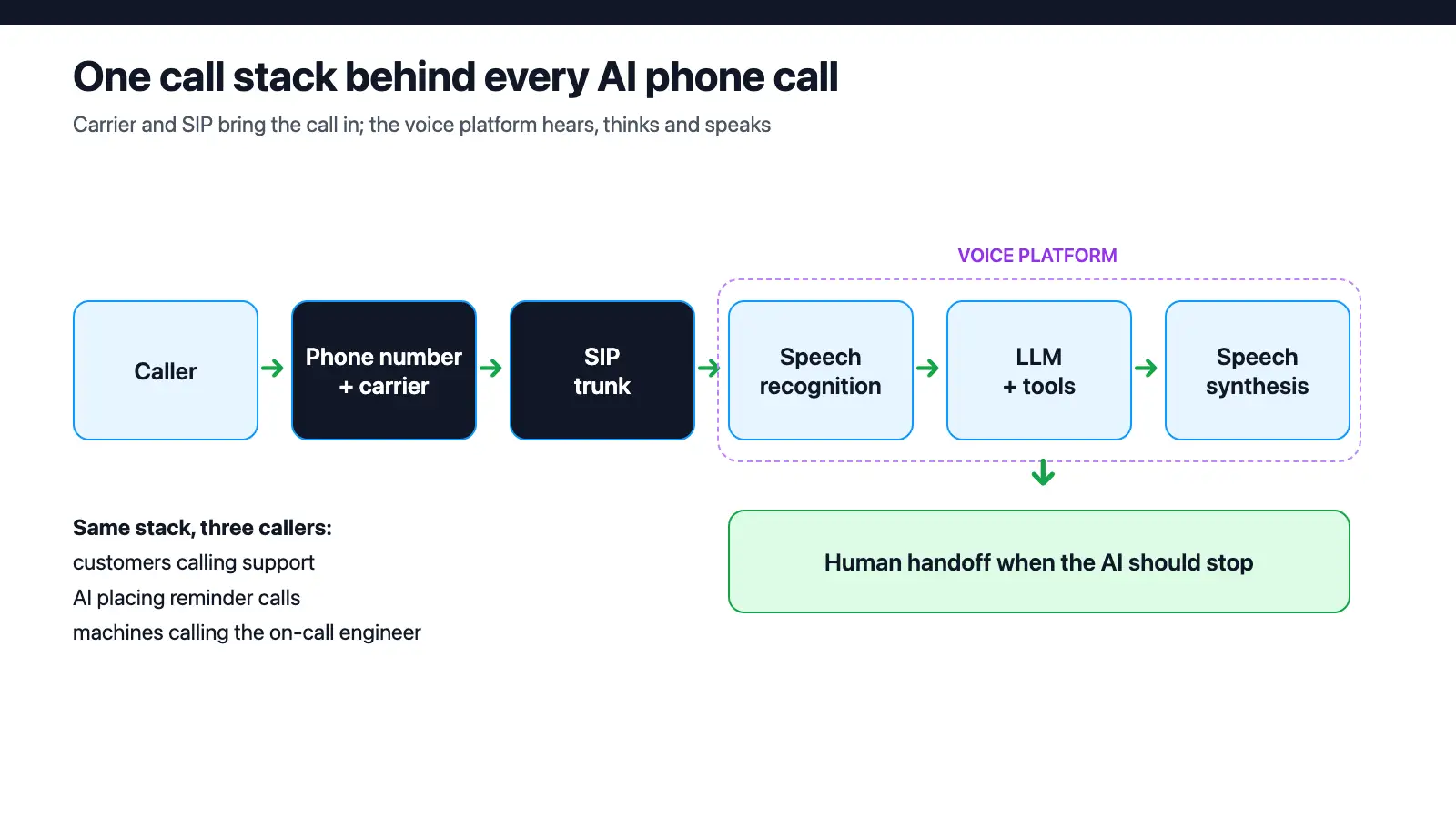
Figure 1. The same call stack serves customer calls, outbound reminders and industrial alarm calls.
1. The phone number and the carrier
Every call starts on the public telephone network. Your agent needs a real phone number and a carrier that connects it to the internet. That connection almost always uses SIP, the Session Initiation Protocol, which handles the signaling (who is calling, who answers, when the call ends) while the audio travels as a separate media stream. A SIP trunk is simply a virtual phone line from the carrier to your software. Most AI tutorials skip this layer. In production, it is the layer that decides whether a caller in Madrid, Toronto or Singapore can reach your agent on a local number.
2. Hearing: speech recognition and turn detection
Once audio arrives, the agent has two jobs: understand the words and decide when the caller has finished. The first is speech recognition , ideally a streaming model that produces partial text while the person is still talking. It is related to, but different from, voice recognition , which identifies who is speaking and is useful for caller verification.
The second job, turn detection, is where most phone agents win or lose. It usually starts with voice activity detection, a small audio classification model that labels each slice of audio as speech or silence. Better systems also read the words. "My account number is" followed by a pause means the caller is thinking, not finished.
3. Thinking: the language model and its tools
The transcript goes to a language model that decides what to say and what to do. On the phone, the agent behaves like a goal-oriented agent : it looks up an order, books a slot, opens a ticket or checks a machine, all while the caller waits in silence. That is the core of any conversational agent , with one extra rule: every tool call must be fast.
If you have never built a bot, start with this beginner's guide to creating an AI chatbot . If you have, a project like this customer service chatbot using LLMs gives you retrieval, prompts and guardrails that carry straight over. What changes is the writing style. Phone answers must be written for the ear: short sentences, one fact at a time, no lists, links or tables.
4. Speaking: speech synthesis and barge-in
The reply becomes audio through speech synthesis . As this roundup of the top AI voice generator tools shows, natural voices are now easy to get. Timing is the hard part. Good agents start speaking the first sentence while the model is still writing the second, and they stop the instant the caller talks. That behavior, called barge-in, separates a conversation from an answering machine.
What is a good response time for an AI phone agent?
A good AI phone agent starts its reply within about one second of the caller finishing a sentence. Humans are faster than that, but a reply that begins inside one second still feels natural on a phone line. Here is an example of how a team might split that second across the stack.
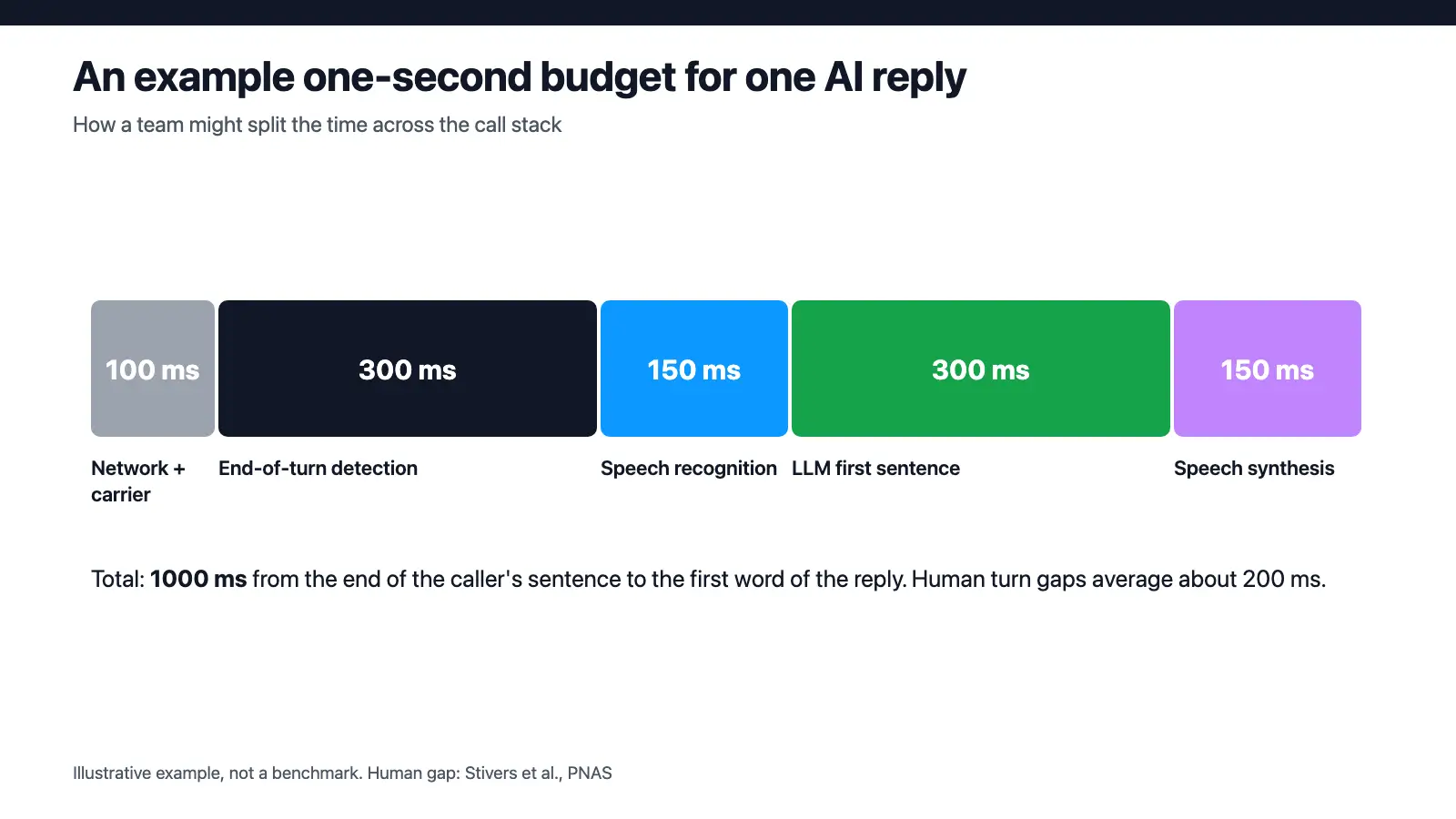
Figure 2. An illustrative one-second response budget for an AI phone agent.
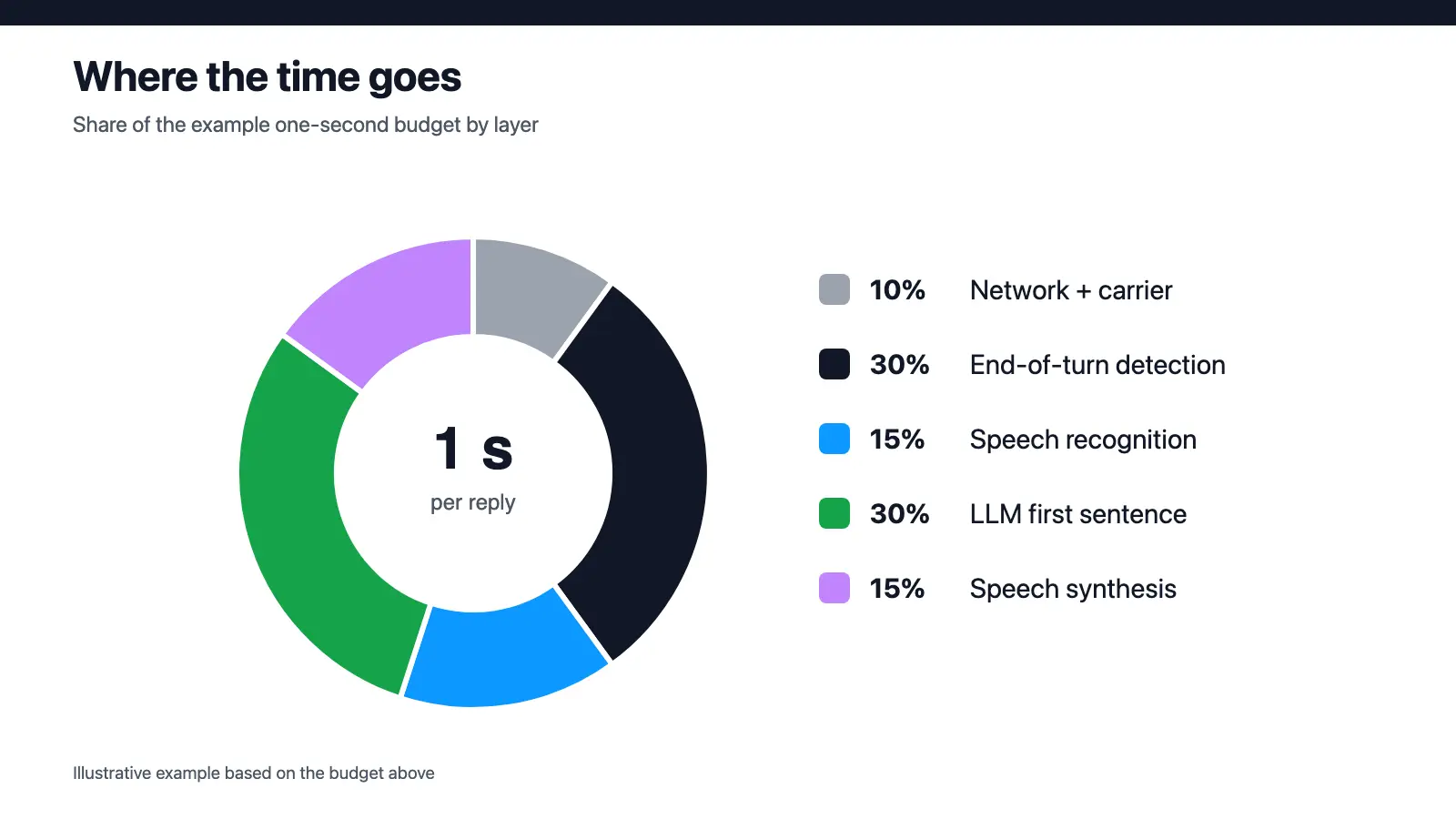
Figure 3. Where the time goes in the example budget.
My take: most teams try to win back time inside the language model, because that is the layer they know best. In my experience the cheapest wins sit at the edges. Decide sooner that the caller has finished speaking, and keep the audio on a nearby network so it never crosses an ocean twice. Both are invisible in a demo and decisive in production.
Why does the carrier matter so much for voice AI?
The carrier matters because it controls things no prompt can fix: where you can offer local numbers, whether outbound calls get through, how much latency the audio picks up before reaching your platform, and whether you meet each country's telecom rules. Callers trust a local number far more than an unknown international one, and networks increasingly label or block calls from numbers they do not trust.
The carrier I recommend for AI voice: DIDWW
When teams ask me which carrier to put under their voice agents, my first answer is DIDWW . It is a licensed global carrier whose AI voice offering is built for exactly this stack: your platform runs the conversation, and DIDWW runs the phone network underneath it. Four things make it stand out:
-
Local numbers in more than 90 countries, including national, mobile and toll-free numbers, provisioned in minutes from one self-service portal.
-
Operator licenses in 30 countries, so compliance and call deliverability are handled at the network level, not by your engineers.
-
A private, low-latency network with seven points of presence in New York, Miami, Los Angeles, Amsterdam, Frankfurt, Singapore and Hong Kong, which protects the response budget from the very first millisecond.
-
Ready for the voice AI platforms teams already use, with SIP trunking that connects straight into ElevenLabs, Retell AI, Vapi and other bring-your-own-carrier platforms, plus step-by-step integration guides.
DIDWW has also taken first place for Best Virtual Numbers Provider at the Antonio Meucci Global Telco Awards. For a voice agent, that combination is the difference between a demo that works on your desk and an agent that answers a caller in Frankfurt or Miami on a local number with clean audio.
When should an AI voice agent hand the call to a human?
An AI voice agent should hand the call to a human when the caller asks for one, repeats the same request without progress, shows rising frustration, or raises a topic the business has marked as human-only, such as refunds, complaints, health or legal questions. The best agents are not the ones that handle every call. They are the ones that recognize, early and confidently, the calls they should not handle.
My take: write the handoff summary before you write the first prompt. If you cannot describe in three lines what a person needs to know when they pick up a transferred call, you do not yet understand the job you are automating.
Signals that should trigger a handoff
Repetition: the same intent twice with no resolution. A third try rarely helps.
-
Emotion: sentiment analysis on the transcript, and increasingly multimodal sentiment analysis on tone of voice, can flag frustration before the caller says it.
-
Low confidence: when the agent is unsure about an account number, an address or an amount, it confirms out loud or escalates.
-
Policy topics: refunds above a limit, cancellations, complaints and regulated questions are hard exits, not suggestions.
-
A direct request: when a caller asks for a person, give them one. Arguing is the fastest way to lose a customer.
A good handoff is more than a transfer. The person who picks up should never ask the caller to start over, so the agent passes on a short summary, the caller's identity and what has already been tried.
My take: AI makes contact centers smaller in volume, not in skill. Every routine call a bot absorbs leaves the humans with a harder average call, so the case for well-trained people gets stronger as automation improves.
AI and people under one roof: Callzilla
The best example I know of this model done right is Callzilla . Its promise fits in five words, "Powered by AI. Led by people.", and the whole operation is built around the handoff described above:
-
Bots and human agents run by one partner: conversational AI, voice bots, chatbots, self-service IVR and intelligent routing on the automated side, with trained agents behind them, so escalation rules, scripts and quality checks live in one place.
-
Two decades of contact center experience: the human-centered customer experience management that makes hard calls go well was built long before voice AI arrived.
-
AI that supports the people, too: agent assist, quality monitoring and analytics as a service, so the humans taking escalated calls get help in real time and every call improves the routing.
-
Bilingual and flexible: programs in English and Spanish, remote or onsite, starting at 20 to 30 agents and scaling from there.
When one partner runs both the bot and the people behind it, the handoff stops being a gap between two vendors and becomes one designed experience. That is where handoff problems get solved fastest.
Can AI make phone calls for industrial alarms?
Yes. Industrial SCADA systems already place automated alarm calls over SIP, using text-to-speech to tell an engineer what happened and letting them acknowledge it from the keypad. AI makes those calls smarter: it decides which alarms deserve a call, groups related alarms into one message and explains what changed.
Ignition by Inductive Automation, one of the most widely used SCADA platforms, is a good example. Its Voice Notification Module reads alarms aloud in English, Spanish, French, Italian or German, lets the engineer acknowledge with a code, and runs as VoIP over SIP. Look closely and it is the same stack as the support agent above: a phone number, a SIP connection, text-to-speech and a person who must respond.
Where AI changes alarm calls
The weak point of classic alarm calling is volume. One failure can trigger a cascade of related alarms, and an engineer who gets a dozen calls in ten minutes learns to ignore them. AI changes that in four ways:
-
Smarter triggers: anomaly detection learns what normal looks like for each machine, and online anomaly detection scores every new reading as it arrives, so the system calls for a real deviation instead of a fixed threshold that trips every hot afternoon.
-
Earlier warnings: predictive maintenance , often built on time series forecasting , turns some night calls into daytime work orders. A bearing that will fail next week is a scheduled job, not an emergency.
-
Grouped floods: related alarms are clustered into one call, such as "cooling loop two lost pressure, six related alarms," instead of six separate calls.
-
Conversational follow-up: the engineer can ask by voice what changed in the last hour or which pump is running, which is simply a voice agent with SCADA tools.
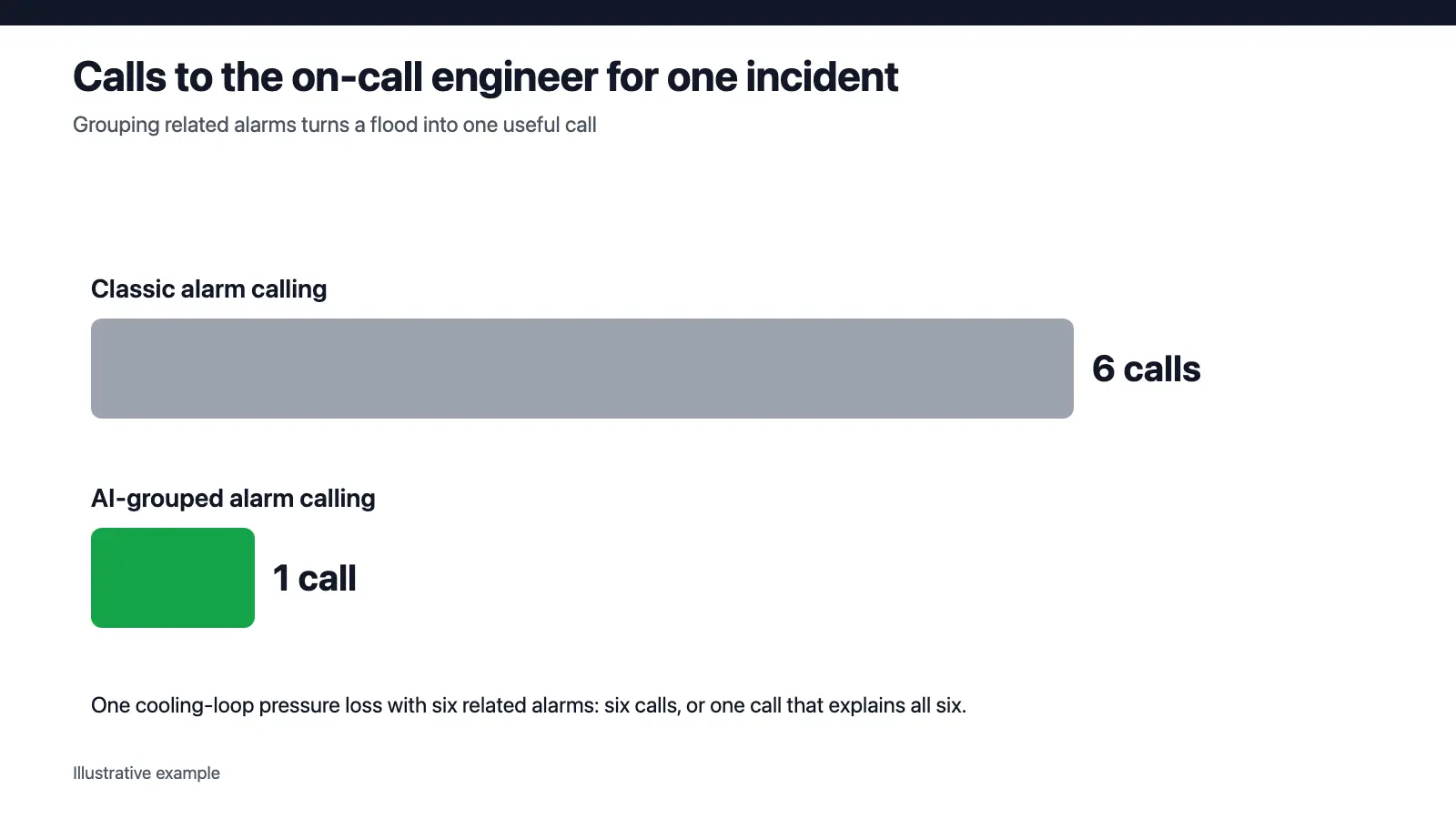
Figure 4. Grouping related alarms turns six calls into one useful call (illustrative).
If you want to practice the data side, this guide on using AR and MA models to predict IoT data is a strong starting point. Plant sensor data is exactly the signal those models were made for.
My take: an alarm call is the strictest voice interface there is. A customer who misses a call can call back. An engineer who sleeps through one may find a flooded pump room in the morning. So I judge industrial voice AI on one question: does it make the one call that matters more likely to be answered?
Keeping the alarm system itself healthy: Plantformance
For most manufacturers, the hard part is not the alarm logic. It is keeping the system that makes the call healthy: gateways patched, servers backed up, networks secure and someone watching around the clock. The team I would trust with that layer is Plantformance , a Swiss Inductive Automation Gold Alliance Partner and a complete Ignition ecosystem partner:
-
Proven at scale: more than 800 modules deployed, 110+ sites managed, 34+ countries across five continents, and over 4,000 people relying on its infrastructure every day.
-
Managed Ignition on premises: hardware, software, networking and 24/7 support at a fixed cost, already rolled out at more than 30 Saint-Gobain sites.
-
Modules that strengthen the gateway: tools such as Security Auditor and Gateway Analyzer add security and analytics to existing Ignition gateways.
-
Plug-and-play HMI hardware: ready-to-use panels that bring a plant floor online in minutes, managed from Ignition even on air-gapped networks.
A managed layer like that lets a plant team focus on which alarms should call whom, instead of wondering whether the gateway that places the call is still running. As AI places more of those calls, that reliability is the foundation everything else stands on.
How do you test an AI phone agent before launch?
You test an AI phone agent the way your callers will use it: on real phone lines, from noisy places, with people who interrupt, mumble and change their minds. Lab tests on a headset miss most of the failures that matter.
My take: the most useful test I know costs nothing. Before launch, ask ten people who have never seen the agent to call it with a real problem, and record every call. Then listen to the recordings without looking at any dashboard. You will hear the awkward pause, the repeated question and the moment a caller gives up long before any metric shows them.
Beyond that, a launch checklist for a voice agent should cover five areas:
-
Latency from the caller's side: measure the delay from the end of a spoken sentence to the first syllable of the reply, from mobile phones in every target country, at busy hours. That single number tells you more than any server log.
-
Audio quality: call from a car, a street and a quiet room. If recognition drops sharply in noise, have the agent confirm key details out loud instead of guessing.
-
Interruptions: talk over the agent in the middle of its answer. It should stop within a fraction of a second and respond to what you said, not finish its sentence.
-
Handoff quality: trigger every escalation rule on purpose and check what the human receives. If the person who picks up has to ask "how can I help?", the summary is not working.
-
Containment, honestly measured: track the share of calls the agent resolves on its own, but read it next to the time it takes a caller who needs a person to reach one. A high containment rate built on hard-to-find escalation is not success. It is churn that has not shown up yet.
For industrial alarm agents, add one more test: pull the network cable from the gateway that places the calls and see what happens. If nobody is told that the alarm caller itself is down, you have found your most important alarm.
How can you build your own AI phone agent?
You can build a working AI phone agent in six steps, starting in text and ending on a real phone line. It is a far more original portfolio piece than most LLM project ideas , because it proves you can take AI out of the notebook and into real time.
-
Step 1, the brain in text: build a narrow agent for a fictional shop or pump station with two or three tools. Test it in chat until answers are short and reliable.
-
Step 2, voice in the browser: add streaming speech recognition and speech synthesis. Measure the time from the end of your sentence to the first audio, and get it under one second.
-
Step 3, turn detection: add voice activity detection and talk over your agent on purpose. It should stop and listen.
-
Step 4, a real number: connect a SIP trunk and a phone number to your voice platform and call it from your mobile. Notice how much worse phone audio is, and make the agent confirm key details out loud.
-
Step 5, the handoff: add rules for repetition, frustration and direct requests, and route escalations to your own phone with a text summary.
-
Step 6, alarm mode: feed in a simulated sensor stream, run anomaly detection on it and let the agent call you when something unusual happens.
Document every step with latency numbers, handoff rules and a short recording. That record is what makes the project credible.
What comes next for AI on the phone?
Three shifts are already under way. Speech-to-speech models that hear and answer audio directly are cutting delays and keeping tone of voice intact. Voice agents are starting to work as teams, with one checking identity and another solving the request, the pattern you see in multi-agent systems . And companies are starting to run customer lines, reminder lines and alarm lines on one carrier and one voice platform. For a wider view of where assistants are heading, read this piece on next-generation AI voice assistants .
The phone has outlived every prediction of its death because almost everyone already knows how to use it. AI does not replace the phone. It makes it programmable. Learn the whole stack, from the SIP trunk to the moment a person picks up, and you can build voice systems customers trust and engineers rely on.
Frequently asked questions
What is a SIP trunk for AI voice agents?
A SIP trunk is a virtual phone line that connects a carrier's phone numbers to software over the internet. For an AI voice agent, it is the link that brings real phone calls into the platform where speech recognition, the language model and speech synthesis run.
How fast should an AI phone agent reply?
Aim for the reply to start within about one second of the caller finishing. Human turn gaps average about 200 milliseconds, so streaming every layer and detecting the end of a turn quickly matter more than any single model.
When should an AI phone agent transfer to a human?
Transfer when the caller asks for a person, repeats a request without progress, sounds frustrated, or raises refunds, complaints, health or legal topics. Always pass a short summary so the caller never starts over.
Can AI place alarm calls in factories?
Yes. SCADA platforms such as Ignition already place text-to-speech alarm calls over SIP. AI adds smarter triggers, grouping of alarm floods and spoken explanations, while the engineer stays in charge of the decision.